Loss of Use Coverage After a Fire or Burst Pipe: What It Pays and What New England Rentals Cost

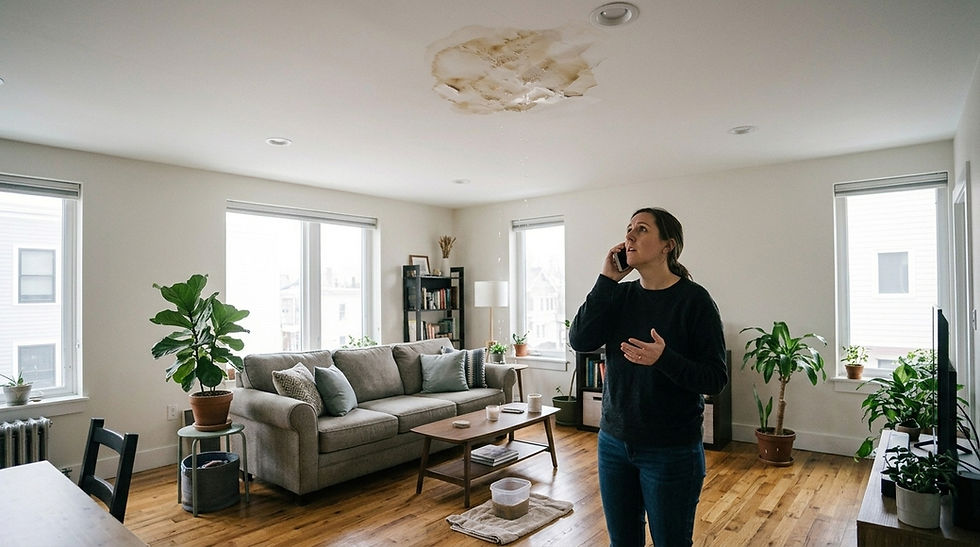
Loss of use coverage pays for the extra cost of living elsewhere while your home is unlivable after a covered event, such as a fire or burst pipe. It can cover temporary housing, increased food costs, and extra travel expenses, but not bills you would pay anyway. Limits are often 20% to 30% of your dwelling coverage, so temporary housing costs can make a big difference in how far your benefits go.
After a major loss, finding somewhere to stay can be just as urgent as repairing the house. In Massachusetts and Connecticut, temporary housing costs can add up quickly while repairs are underway.
Also known as additional living expenses or Coverage D, loss of use is often misunderstood, especially because payments may continue while the rest of the claim is being settled.
This guide explains what the coverage pays for, how limits work, how long benefits typically last, and what can complicate a claim.
What Does Loss of Use Coverage Pay For?
Loss of use pays the increase in your living costs caused by being out of your home, so that your household can keep a normal standard of living. The key word is increase: the coverage measures what you spend now against what you would have spent anyway.
A standard homeowners policy splits loss of use into three parts:
Additional living expenses: the extra cost of temporary housing and day-to-day living while the home is being repaired.
Fair rental value: if you rented out part of your home, such as an apartment in a two-family house, the rent you lose while it is unlivable.
Civil authority: living costs when a government order keeps you out of your home because of damage nearby, typically for a short period of up to two weeks.
Expenses That Are Usually Covered
Rent for a temporary home, or hotel stays while you find one
Furniture rental for a temporary unit, if you cannot use your own
Restaurant meals and groceries, above what you normally spend on food
Extra mileage and tolls if your commute or school run gets longer
Laundry, if you no longer have a washer and dryer
Utility setup and deposits for a temporary home
Pet boarding, if temporary housing does not allow pets
Moving and storage costs connected to the displacement
Expenses That Are Usually Not Covered
Your mortgage, property taxes and insurance premiums, which you would pay anyway
Normal grocery spending, utilities and other bills you would have had at home
Upgrades to a temporary home well beyond your normal standard of living
Costs from a loss the policy does not cover, such as most flood damage under a standard homeowners policy
This is general information about how many policies are written, not a coverage opinion on your claim. Your policy's wording controls. For a question about your specific coverage, ask your insurer or the licensed adjuster reviewing your policy.
How Much Loss of Use Coverage Do You Have?
The limit is printed on your declarations page, often as Coverage D. Under the standard insurance industry homeowners forms, the limit is 30 percent of the dwelling limit, and 10 percent under the older-home HO-8 form, according to IRMI's insurance definitions.
Many insurers set it lower, commonly around 20 percent, and some list a flat dollar amount instead. Condo HO-6 policies and renters policies usually set it as a percentage of personal property coverage.
Here is what that means in dollars for a home with a $450,000 dwelling limit:
Loss of use limit | Dollars available |
10 percent | $45,000 |
20 percent | $90,000 |
30 percent | $135,000 |
That can sound like plenty. Whether it is depends on where you live, how big your household is, and how long the repairs take.
What Does Temporary Housing Cost in Massachusetts and Connecticut?
Rent is usually the largest loss of use expense, and New England rents vary widely from town to town. The table below uses HUD's FY2026 Small Area Fair Market Rents, which are published by ZIP code and are available from HUD User.
Area (ZIP) | 2-bedroom, per month | 3-bedroom, per month | Six months, 3-bedroom |
Boston, Seaport (02210) | $3,910 | $4,680 | $28,080 |
Cambridge (02141) | $3,800 | $4,560 | $27,360 |
Framingham (01703) | $2,980 | $3,570 | $21,420 |
Boston, Dorchester (02121) | $2,560 | $3,080 | $18,480 |
West Hartford (06117) | $2,360 | $2,830 | $16,980 |
Glastonbury (06033) | $2,330 | $2,790 | $16,740 |
East Hartford (06108) | $1,650 | $1,980 | $11,880 |
Source: U.S. Department of Housing and Urban Development, FY2026 Small Area Fair Market Rents. Six-month figures are simple multiples for illustration.
Three things make real displacement costs higher than these benchmarks:
They are not top-of-market rents. HUD sets fair market rents at about the 40th percentile of local rents for standard units, so a comparable home in a good school district often costs more.
They assume a normal lease. A displaced family usually needs a short lease and a furnished unit, both of which cost more than a standard year-long rental.
Rent is only part of it. Furniture rental, utilities, extra mileage and higher food costs add up month after month.
To put it together: a family in Framingham that needs a three-bedroom for nine months would spend about $32,000 on rent alone at the HUD benchmark, before furniture, utilities or meals. On a policy with a $90,000 limit, that still leaves room.
On a large fire where the rebuild takes a year or more, in a higher-rent town, the limit can run low. These are illustrations, not a prediction of any individual claim, which depends on the policy, the loss and the facts.
How Long Does Loss of Use Coverage Last?
Under the standard homeowners form, loss of use generally lasts for the shortest reasonable time needed to repair or replace the damage, or, if you decide to move permanently, the shortest time needed for your household to settle elsewhere.
Some policies also add a fixed time cap, such as 12 or 24 months, and every policy is subject to its dollar limit. Your declarations page and the loss of use section of your policy set the terms that apply to you.
The phrase "shortest reasonable time" is where many disagreements start. Repairs after a fire or major water loss can be slowed by permits, contractor availability, material delays, and the time it takes to reach agreement on the repair estimate itself. Delays outside your control generally do not shorten the time a repair reasonably takes, but they need to be documented to make that case.
Why Do Loss of Use Claims Run Into Trouble?
Loss of use is paid as you go, which means disagreements can surface at any point during the claim, not just at the end.
Whether the home is unlivable: An insurer may treat a home as livable if some rooms are usable. A house with no working kitchen, no safe heat in a New England winter, or heavy smoke odor throughout is a different matter, and the case is made with evidence.
What counts as comparable housing: Your standard of living sets the benchmark. A family of five used to a single-family house with a yard is not expected to live long-term in a one-room hotel, and staying near your children's schools and your work is a reasonable factor.
When payments stop: If the insurer's estimate of repair time is shorter than reality, payments can end while the house is still torn open. Contractor schedules, permit records and written explanations of delays are what keep the timeline grounded.
Expenses without receipts: Loss of use is reimbursed against documentation, so missing receipts become missing money.
Running out of limit: On large losses, temporary housing can use up a meaningful share of the limit, which makes an accurate repair timeline even more important.
What Records Should You Keep for a Loss of Use Claim?
The simplest way to protect a loss of use claim is to treat it like an expense report from the first night.
Keep every receipt: hotels, rent, furniture rental, meals, mileage, laundry, pet boarding and utility deposits.
Track your normal costs, such as your usual monthly grocery and utility bills, so the increase is easy to show.
Log mileage with dates and the reason for each extra trip.
Save your temporary lease and any listings you considered, which show what comparable housing actually costs in your area.
Document why the home is unlivable with photos and, where relevant, notes from contractors or the local building official.
Keep a repair timeline, with permit dates, contractor schedules and any delays, and share it with your adjuster in writing.
Submit expenses regularly, monthly if possible, rather than in one large batch at the end. Your policy sets the requirements for documenting a claim, so review it or ask your insurer what applies to you.
Frequently Asked Questions About Loss of Use Coverage
Is Loss of Use the Same as Additional Living Expenses?
Mostly. Loss of use is the name of the coverage section, often labeled Coverage D. Additional living expenses is its main part, alongside fair rental value and civil authority coverage.
Does Loss of Use Pay My Mortgage While I Am Displaced?
No. Your mortgage, property taxes and insurance premiums continue whether or not you live in the home, so they are not extra costs caused by the loss.
Can I Stay With Family Instead of Renting?
Yes, and it is worth discussing with your insurer. Your extra costs, such as added mileage, food and a fair contribution to the household's expenses, may still be covered. Agree in writing on what will be reimbursed.
Does Loss of Use Have a Deductible?
Usually, loss of use is not subject to its own separate deductible, though your main policy deductible applies to the overall claim. Check your declarations page and policy wording.
Will Loss of Use Pay if a Burst Pipe Leaves Us Without a Kitchen or Heat?
It can, when the damage makes the home unfit to live in. Burst pipes in a New England winter often leave homes without heat or usable plumbing, which is a strong basis for displacement. Our ice dams and burst pipes page covers how those claims are handled more broadly.
Do Condo Owners and Renters Have Loss of Use Coverage?
Yes. Condo HO-6 and renters policies usually include it, often set as a percentage of personal property coverage. For condo owners, it is one of the parts of the HO-6 that matters most after a leak from another unit.
Can a Public Adjuster Help With a Loss of Use Claim?
Yes. A licensed public adjuster represents you, the policyholder, rather than an insurance company. On a large fire or water loss, loss of use is one part of a bigger claim, and the work is documentation and negotiation: reviewing your policy, preparing the repair estimate, and presenting the claim, including the living expenses that come with it. A public adjuster does not find housing or perform repairs.
The repair estimate and the loss of use claim are closely linked, because a realistic repair scope and timeline is what keeps loss of use payments matched to how long you are actually out of your home. That connection is a theme in our guides to what a fire damage claim is actually worth and how much a water damage claim is worth.
On a loss of use claim, that typically means:
Documenting why the home is unlivable, room by room, with Matterport 3D imaging.
Building a detailed repair estimate in Xactimate, the same software most insurers use, so the repair timeline rests on the real scope of work.
Organizing living expense records so they can be submitted clearly and regularly.
Presenting comparable housing costs for your area when the reasonableness of rent is questioned.
Keeping you informed, while the decision to accept any settlement stays with you.
You can bring in a public adjuster before you file or after the claim has started. Naiche works on a contingency fee, a percentage of the settlement that is disclosed and agreed in writing before any agreement is signed, with nothing to pay up front. See how our process works, or schedule a free consultation to talk through your claim. We represent policyholders, not insurers.
Naiche Inc. is led by Austin Bernaiche, a licensed public insurance adjuster in Connecticut, Massachusetts, Rhode Island, Vermont, New Hampshire, Maine, North Carolina, South Carolina, Florida and Utah. Naiche acts only on losses located in those states. This article is general information. It is not legal advice or a coverage opinion, and no particular claim outcome is guaranteed.